

Description
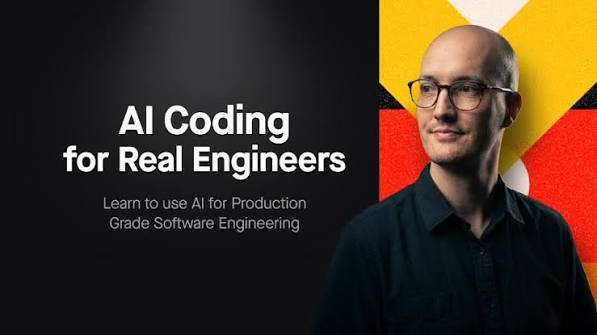
Matt Pocock – AI Coding for Real Engineers: An Honest, Deep-Dive Review
The tech landscape moves fast, but the rapid integration of artificial intelligence into daily software development has felt like a seismic shift. Almost overnight, developers transitioned from manually typing out every line of boilerplate to managing intelligent autocompletion, context-aware suggestions, and autonomous code agents. Yet, amidst the endless sea of hype, social media demos, and exaggerated claims about “the end of programming,” working developers are left with a critical question: How do we actually use these tools to build production-ready software faster without compromising code quality?
Enter Matt Pocock – AI Coding for Real Engineers. Known across the developer community for his crystal-clear TypeScript tutorials, deep technical authority, and pragmatic teaching style, Pocock released this course to bridge the gap between simple prompt engineering gimmicks and genuine, high-throughput software engineering.
This review provides an unbiased, comprehensive breakdown of what the course covers, who it is truly built for, where it shines, and whether it justifies your time and financial investment.
The Core Philosophy: Pragmatism Over Hype
Many courses on modern developer tools fall into one of two traps. They either present basic surface-level features that any developer could figure out in ten minutes, or they indulge in speculative futurism that bears little resemblance to real-world codebases.
What sets Matt Pocock’s approach apart from the start is its unwavering focus on the working engineer. The course does not treat AI as a magic wand that replaces thinking, architectural design, or foundational computer science principles. Instead, it positions AI as a high-powered amplifier for developer intent.
The curriculum starts with a clear thesis: the best way to leverage modern assistant tools is to treat them as junior engineers who possess infinite speed but require explicit context, clear boundaries, and rigorous code reviews. By shifting the perspective from “letting the tool code for me” to “orchestrating intent and verifying output,” Pocock establishes a workflow designed for long-term maintainability rather than quick hacks.
Comprehensive Module Breakdown
The curriculum is structured logically, moving from core mental models to advanced environment setups and specialized workflows.
1. Re-architecting the Developer Mental Model
Before diving into specific extensions or IDEs, the course forces you to re-evaluate how you break down problems. Pocock breaks down the concept of Context-Driven Development. You learn:
-
How to structure specifications so LLMs don’t hallucinate missing business logic.
-
The exact ratio between human architectural planning and automated code generation.
-
Techniques for preventing “context drift” during long coding sessions.
2. Mastering Context: The Real Secret to AI Performance
The primary reason developers get poor results from assistant tools isn’t a lack of smart models; it is a lack of context. The course spent significant time demonstrating how to feed your environment the exact information it needs.
-
Workspace Indexing: Managing project rules, custom instructions, and
.cursorrules(or framework-specific equivalent files) to enforce codebase patterns automatically. -
Documentation Injection: Seamlessly fetching and linking external library docs so the assistant generates syntax according to current versions rather than outdated training data.
-
Targeted References: Precise referencing of relevant files, types, and schema definitions to keep outputs accurate.
3. Refactoring, Debugging, and Testing Loops
Generating brand-new code is easy; modifying existing complex systems is where real engineering happens. Pocock demonstrates practical strategies for handling legacy code:
-
Utilizing test-driven workflows to verify generated code automatically.
-
Prompting strategies for step-by-step refactoring without introducing subtle regression bugs.
-
Using assistants to rapidly trace edge-case bugs and write comprehensive test suites.
4. Advanced Tooling & Custom Workflows
Beyond standard chat interfaces, the course dives deep into modern editor setups—focusing heavily on specialized IDEs like Cursor and advanced extensions for VS Code. You are guided through setting up custom rules, automated terminal commands, and scripts that turn repetitive developer tasks into single-command executions.
Key Highlights: What Makes This Course Stand Out?
+-------------------------------------------------------------------+
|                        KEY COURSE HIGHLIGHTS                      |
+-------------------------------------------------------------------+
| 1. ZERO FLUFF: Straight-to-the-point lessons with live coding.   |
| 2. REAL-WORLD CODE: Taught on complex, non-trivial codebases.     |
| 3. FRAMEWORK AGNOSTIC: Concepts apply to TypeScript, Python, Go. |
| 4. SAFETY-FIRST: Emphasizes verification, testing, and security.  |
+-------------------------------------------------------------------+
High-Density, Concise Content
Matt Pocock is celebrated for eliminating fluff, and this course continues that tradition. Lessons are tightly edited, laser-focused, and respect the viewer’s time. Instead of watching an instructor stumble through errors or type out long boilerplate live, you receive polished, highly dense demonstrations accompanied by clear explanations.
Production-Grade Codebases
Many online tutorials demonstrate features on clean, single-file todo apps. Pocock explicitly avoids this trap. The strategies in this course are demonstrated on non-trivial, multi-file projects with real dependencies, complex type systems, and historical tech debt. Seeing how to navigate context limits in a real codebase provides immediate actionable value.
Focus on Type Safety and Verification
Coming from a strong TypeScript background, Pocock emphasizes strict types as the ultimate feedback loop for generated code. By pairing strong type definitions with automated test suites, you create a sandbox where the assistant can iterate rapidly without breaking system invariants.
Detailed Pros and Cons
To keep this review balanced and honest, here is a breakdown of where the course excels and where it might fall short for certain learners.
The Positives (Pros)
-
Immediate ROI: You can implement the context-structuring techniques immediately after watching the first few modules, resulting in a noticeable speed bump in daily tasks.
-
Tool-Agnostic Concepts: While specific tools like Cursor and GitHub Copilot are featured heavily, the core principles—context control, prompt decomposition, and verification loops—apply regardless of which platform or model you use.
-
Practical Custom Instructions: The course provides field-tested templates for project configuration files (
.cursorrules, system prompts) that save hours of trial and error. -
Emphasis on Quality: It clearly distinguishes between fast code and good code, ensuring developers don’t end up generating technical debt at scale.
Potential Drawbacks (Cons)
-
Prerequisite Knowledge Required: This is explicitly not a course for complete beginners. If you do not already know how to write software, structure architectures, and read code, you will struggle to follow along.
-
Fast-Paced Tool Evolution: Because the tooling ecosystem changes almost weekly, specific UI elements shown in the videos may update over time (though the fundamental principles remain intact).
Feature Comparison: Traditional Workflow vs. Pocock’s AI Workflow
| Feature / Task | Traditional Engineering Workflow | The “Real Engineers” AI Workflow |
| Boilerplate Creation | Manual typing, copying from past projects | Context-aware generation via tailored rules |
| Documentation Search | Context switching to browser tabs & docs | In-editor documentation injection |
| Debugging Strategy | Manual log points & line-by-line stepping | Assistant-guided root-cause hypothesis generation |
| Test Coverage | Often written late due to time constraints | Rapid test generation alongside feature specs |
| Code Refactoring | High friction, tedious manual edits | Controlled multi-file transformations with type checking |
Who Is This Course For?
Highly Recommended For:
-
Mid-to-Senior Engineers: Developers who already know how to build applications but want to double their output by offloading tedious implementation details without sacrificing code architecture.
-
Tech Leads & Engineering Managers: Professionals looking to establish standardized AI usage guidelines, rules files, and safety standards for their development teams.
-
Full-Stack & Frontend Developers: Particularly those working in TypeScript, JavaScript, or modern web frameworks who want seamless integration within VS Code or Cursor ecosystems.
Not Suited For:
-
Absolute Beginners: If you are still learning basic programming constructs (variables, loops, functions), focus on core software foundations before taking this course.
-
Developers Seeking Fully Autonomous “No-Code” Solutions: This course is about enhancing engineering discipline, not replacing it with hands-off automation.
Final Verdict and Rating
Matt Pocock – AI Coding for Real Engineers stands out as one of the most practical, mature, and zero-nonsense guides available on the subject today. Instead of chasing viral trends or selling unrealistic promises, Pocock delivers a structured, professional framework that turns modern assistant tools into reliable daily driver utilities.
If you are a working developer who wants to cut through the noise, eliminate repetitive setup tasks, and master the art of context engineering, this course is well worth the investment. It will fundamentally change the way you interact with your editor and elevate your day-to-day coding efficiency.
Overall Rating: 9.5 / 10





Reviews
There are no reviews yet.